What makes furnace repair in Factoria different?
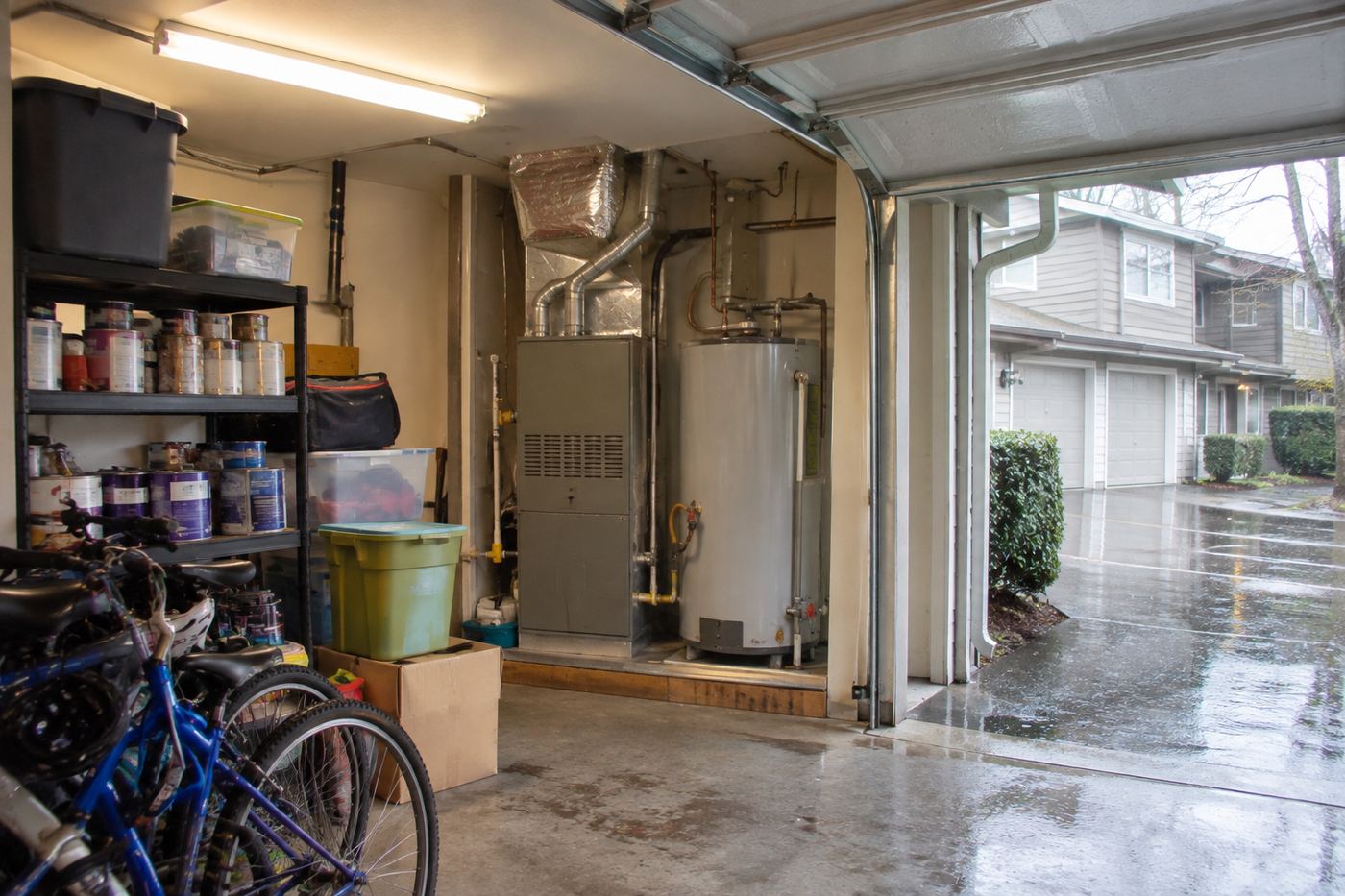
Factoria homes and condos often have their furnaces in garages or crawl spaces rather than inside the living area. Those spaces stay cool and damp through a Bellevue winter, so moisture, rust and drainage problems drive many of the repair calls here.
Factoria sits in south Bellevue close to I-90, with a mix of single-family homes, townhomes and condo buildings. In the houses, the furnace is very often in the attached garage or down in a crawl space with ducts running beneath the floor. In condos and townhomes it may be in a garage bay, a utility closet off the parking level, or a small mechanical room.
Those locations are practical, but they are not heated or dried the way a living room is. The Pacific Northwest heating season brings months of cool, wet air, and garages and crawl spaces hold onto that dampness. Over time it shows up as rust on the cabinet floor, corroded wire connections, and a coating on the flame sensor that makes the burners shut off.
High-efficiency furnaces add their own water. They produce condensate every time they run, and that water has to drain away through a trap and plastic line, sometimes to a small pump. In a cold garage or crawl space, a slow drain or a failed pump can back water up into the furnace and shut it down. Most homes here heat with natural gas from Puget Sound Energy, so these are mostly gas furnace problems.
The good news is that moisture damage is usually caught early if someone looks. When you call for furnace service in Bellevue, say where the furnace sits so the provider comes ready for a garage floor or a crawl space hatch.
Which furnace services do Factoria homeowners need most?
The four services below line up with the problems damp garage and crawl space installs tend to cause, starting with the most common.
1. Condensate leaks and drain clogs
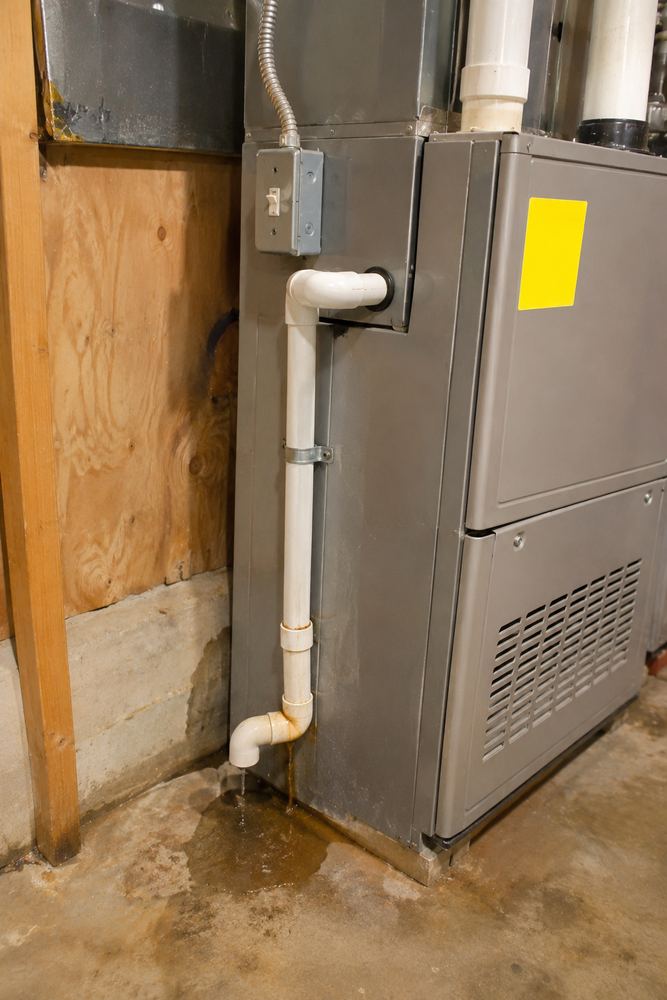
If you see water on the garage floor next to the furnace, or a pump that hums but never empties, the drain system is the first suspect. A clogged trap, a cracked fitting or a pump with a stuck float switch can all stop the heat. Our page on furnace condensate leak repair explains the parts and what a technician does to clear and test them.
2. Flame sensor and igniter faults
A damp space speeds up the coating that forms on a flame sensor rod. When the sensor cannot prove the flame, the burners light for a few seconds and then shut off. Igniters in garages also take a beating from temperature swings. Read about igniter and flame sensor repair if your furnace tries to start but will not stay lit.
3. Gas furnace parts and corroded venting
Rust reaches the inducer motor housing, the burner rack and the metal vent connectors on standard-efficiency units. A technician checks for corroded connections, a sticky gas valve and exhaust leaks at rusted joints. The gas furnace repair page covers this in detail.
4. No heat on the first cold morning
A furnace that sat idle in a damp garage all summer sometimes will not start when the weather turns. Corroded terminals, a tripped float switch or a failed control board are common reasons. Our guide to furnace not heating repair lists the checks in order.
What should you check in a garage or crawl space before winter?
- Look for rust flakes or water stains under and around the furnace cabinet
- Pour a cup of water into the condensate pump and make sure it switches on and empties
- Keep gasoline, paint thinner and solvents well away from a garage furnace
- Check the crawl space vapor barrier and look for standing water near the unit
- Clear a path to the crawl space hatch so a technician can get in quickly
- Replace the filter, since damp dust clogs it faster
Pro tip: If your condensate line runs to a floor drain in the garage, make sure nothing is parked or stored on top of it. A crushed line backs water into the furnace without any warning.
Which nearby areas do we also serve?
Up the hill, homes in Somerset tend to be larger, so the usual complaints shift to uneven heat between floors and bigger or zoned systems. North of I-90, Lake Hills has many mid-century houses where older furnaces and venting are the bigger concern.
Not sure which neighborhood you are in? It makes no difference to the call. Give us your ZIP code and a short description of the problem, and you are connected with a provider who covers your area.
Factoria furnace questions
Why is there rust on the bottom of my garage furnace?
Damp garage air, a leaking condensate line or water dripping off a parked car can all rust the cabinet floor. Surface rust on the outside is common and mostly cosmetic, but rust inside near the burners or on the heat exchanger needs a technician's eye.
My furnace is in the crawl space. What should I do before the technician arrives?
Clear the path to the access hatch, move anything stored on top of it, and have a flashlight ready. Mention the crawl space when you call so the provider can plan for the tight space and bring the right tools.
Does a gas furnace in a garage need to be raised off the floor?
Building codes commonly require gas appliances in garages to have their ignition source raised above the floor, because gasoline vapor is heavy and settles low. Ask the provider whether your installation meets local code, especially if the furnace sits directly on the slab.
Why does my condo furnace smell musty when it first starts?
A musty smell often comes from damp ducts or a wet condensate trap. A light dusty smell on the first cold day is normal, but a musty smell that keeps returning points to moisture that should be found and fixed.
My condensate pump is in the garage and the furnace stopped. Are they related?
Very likely. Many condensate pumps have a safety switch that shuts the furnace off when the pump fills up and cannot drain. A full pump, a clogged line or a dead pump motor will all stop the heat until the water has somewhere to go.
Related furnace help
Moisture problems often lead to one of these repairs.