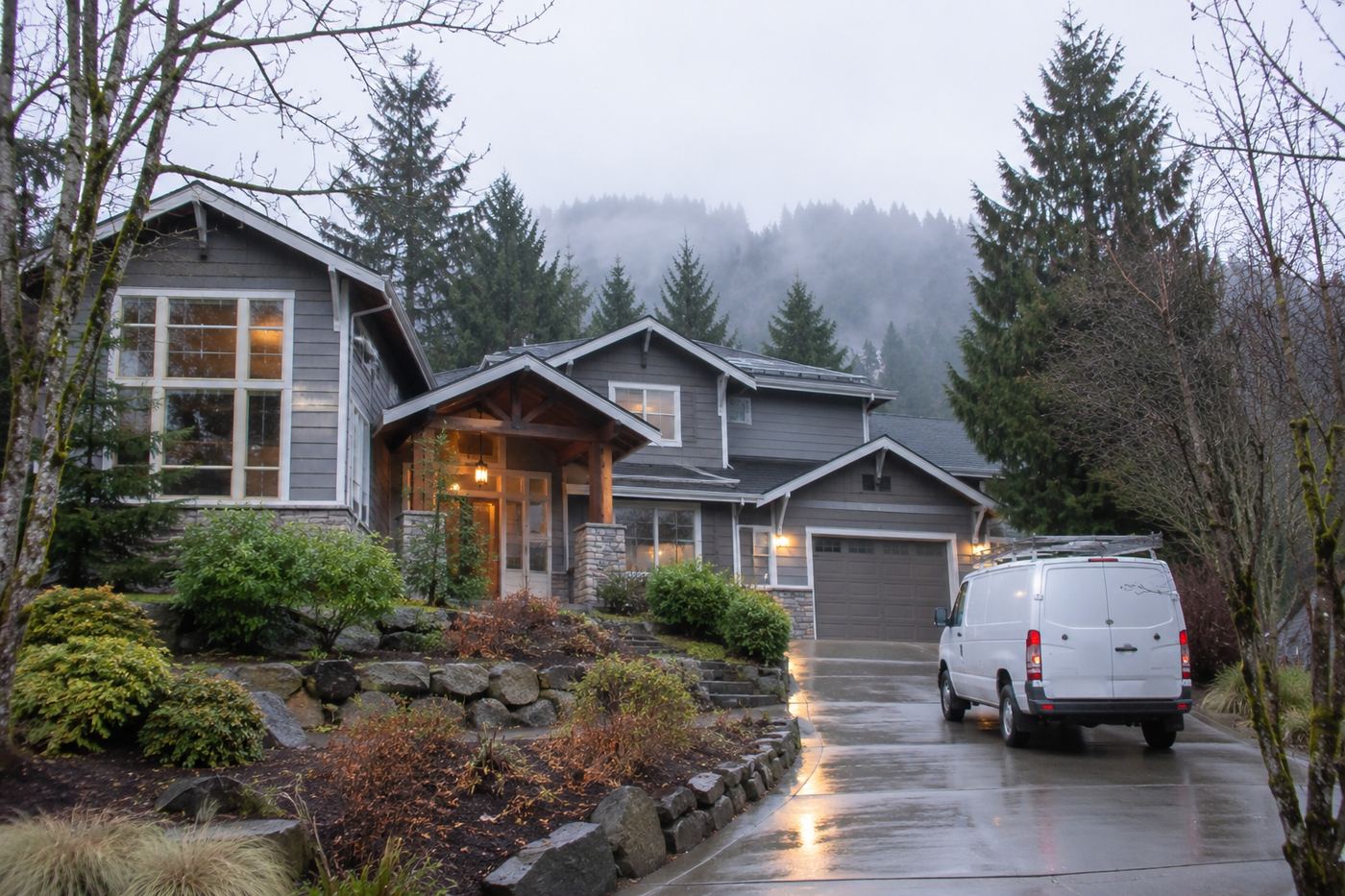
Why do Somerset homes have their own furnace problems?
Many Somerset homes are larger houses built into the hillside, often with two or three levels. Heating that much space evenly takes a bigger furnace, longer ducts and sometimes zones, and that is where most of the trouble starts.
Somerset sits on the hill above Factoria in south Bellevue. Houses here tend to be on the larger side, and many step down the slope with a main floor, an upper floor and a lower or daylight level. Some have two furnaces, one for each part of the house. Others have one larger furnace feeding a zoned duct system with motorized dampers and more than one thermostat.
That setup brings comfort when it works, but it gives a furnace more ways to fall short. A long duct run to a far bedroom loses heat before it arrives. A damper that sticks closed leaves one zone cold while the other zone overheats. A blower that has slowed down may still move enough air for the main floor but not enough to push warm air all the way upstairs.
Bellevue's long, damp heating season means these systems run for months, often with one zone calling for heat far more than another. Most homes here use natural gas from Puget Sound Energy. In a large house the furnace is typically in the garage, a lower-level mechanical room or a crawl space, and the thermostats can be two floors away from it.
So a Somerset call is often less about a single dead part and more about why heat is not reaching every floor. Mention how many levels and thermostats you have when you call. For more on the faults that apply everywhere, see our main page on Bellevue heating help.
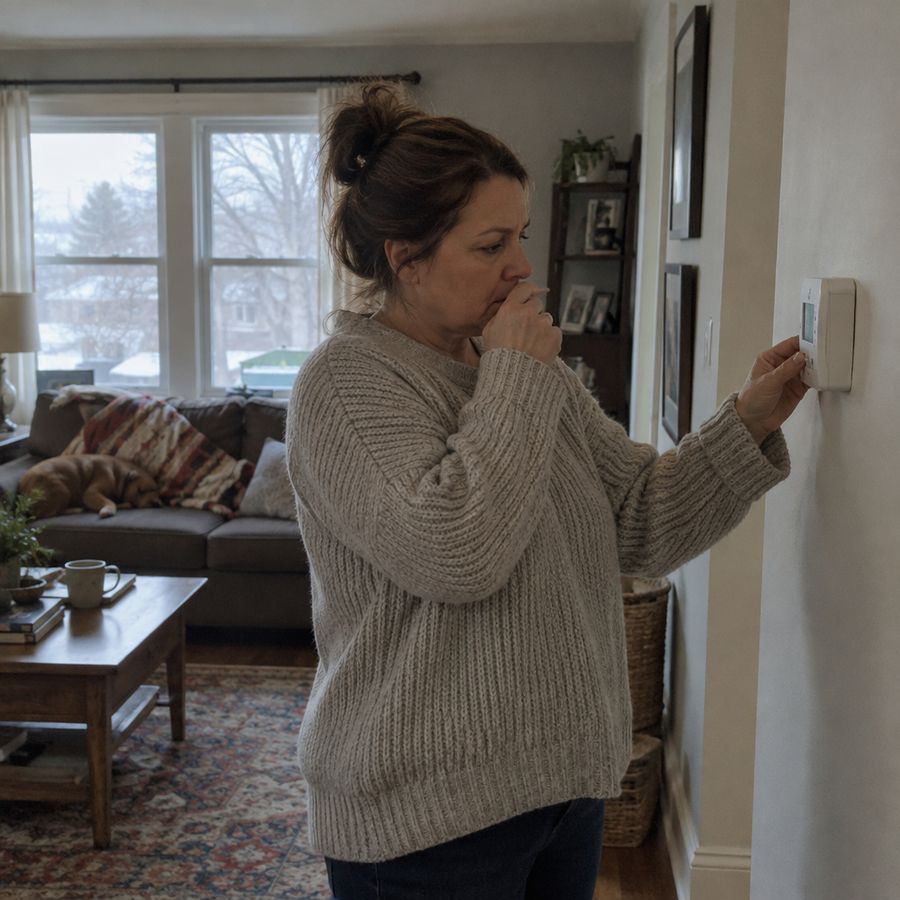
What are the signs of uneven heat between floors?
Which furnace services do Somerset homes need most?
These four services match the problems that bigger, multi-level homes run into, with the airflow repairs first because they cause the most comfort complaints.
1. Blower motor repair for long duct runs
In a large home, the blower has to push air through more ductwork and up more height than in a small one. A failing capacitor, a dirty blower wheel or a motor on the wrong speed setting shows up first as a cold upper floor. Read about furnace blower motor repair to see what a technician measures before replacing anything.
2. Short cycling in bigger or zoned systems
When only one small zone calls for heat, a large furnace can overheat and shut off quickly because the ducts it can reach are limited. Oversized furnaces do the same thing. Our page on short cycling repair explains the limit switch, bypass and airflow checks a technician uses to stop the on-off cycle.
3. One zone with no heat at all
If one thermostat gets heat and the other does not, the fault may be a stuck damper motor, a failed zone panel, or a second furnace that has stopped working on its own. Our guide to furnace not heating repair covers how a technician narrows it down, starting at the thermostat signal.
4. A tune-up sized for a larger system
Two furnaces mean two sets of burners, sensors and filters to check, and a zoned system adds dampers and controls. A yearly furnace tune-up is the time to have each zone tested and the airflow balanced before the cold sets in.
What should you check in a larger home before winter?
- Change every filter, including the one on a second furnace
- Open all supply vents and make sure none are hidden behind furniture
- Replace batteries in each thermostat
- Run each zone on its own for ten minutes and feel the vents on that floor
- Look at the zone panel lights near the furnace, if you have one
- Test carbon monoxide alarms on every level
Which nearby areas do we also serve?
Down the hill in Factoria, more homes and condos have furnaces in garages and crawl spaces, so moisture and condensate drains are the common calls. Across I-90, Lake Hills has many mid-century homes where an older furnace and its venting get most of the attention.
Calls from any part of Bellevue are connected the same way. Give us your ZIP code, the number of floors and what each thermostat is doing.
Somerset furnace questions
Why is one floor of my house warm and another cold?
Warm air rises, long duct runs lose heat, and a weak blower or stuck zone damper can starve one level. A technician checks airflow at each floor, the damper positions and the blower speed to find which one it is.
My home has two thermostats. Does that mean two furnaces?
Not always. Some larger homes have two furnaces, while others have one furnace with motorized dampers that split the ducts into zones. Look for a zone control panel near the furnace, or ask the technician to show you how your system is set up.
Can a furnace be too big for a house?
Yes. An oversized furnace heats the area near the thermostat quickly, shuts off, and leaves far rooms cool. The constant starting and stopping also wears out igniters, inducers and blower motors faster.
How often should I change the filter on a larger furnace?
It depends on the filter. Thick media filters in a cabinet may last several months, while thin 1-inch filters need checking monthly in winter. Follow the filter maker's guidance and swap it sooner if it looks gray.
The room over my garage is always cold. Can a furnace repair fix that?
Sometimes. If the cause is a closed damper, a disconnected duct or a weak blower, a repair can help a lot. If the room simply has a long duct run through an unheated space, the provider may suggest duct sealing or insulation work instead.
Related furnace help
Uneven heat and cycling often lead to these pages.